Hidden Leaks: The Plumbing Problem You Don't Know You Have
Most plumbing problems make themselves known quickly — a backed-up drain, a running toilet, a water heater that stops producing hot water. But hidden leaks are different. They can run silently inside walls, beneath concrete slabs, or under flooring for months before any visible sign appears, all while causing progressive water damage to wood framing, drywall, insulation, and flooring. In a coastal environment like Hermosa Beach, where salt air already challenges building materials and moisture management is critical, an undetected leak can escalate from a minor repair to a significant restoration project in a surprisingly short time.
Understanding what causes hidden leaks in Hermosa Beach homes, how to recognize the early warning signs, and how professional leak detection works can help you catch problems early — before the damage becomes structural and the repair bill becomes substantial.
Why Hermosa Beach Homes Are Particularly Vulnerable to Pipe Leaks
Coastal properties face a set of conditions that accelerate pipe deterioration in ways that don't affect homes further inland. The two primary culprits in the Hermosa Beach area are salt air and local water chemistry.
Salt air is corrosive to metal. Copper plumbing — which was the standard installation material in South Bay homes built from the 1950s through the 1980s — is vulnerable to a specific type of corrosion called pitting corrosion when exposed to certain water chemistry conditions combined with salt-laden air in crawl spaces and wall cavities. Pitting corrosion creates tiny, pinhole-sized breaches in copper pipe walls that initially release only a small amount of water. Over time, however, water pressure enlarges the opening and the leak worsens — or additional pinholes develop nearby.
Homes in the Hill Section and older beach cottage neighborhoods near the Strand are particularly likely to have original copper plumbing that has been in service for 40 to 60 years. While copper is a durable material, it was not designed to last indefinitely, especially under coastal conditions. If your home is in this category, it's prudent to be proactive about leak detection rather than waiting for a visible sign of failure.
Early Warning Signs of a Hidden Water Leak
Hidden leaks rarely announce themselves with an obvious flood. Instead, they typically reveal themselves through a series of subtle, easy-to-overlook clues. Pay attention to any of the following:
- An unexplained increase in your water bill — If your usage habits haven't changed but your water bill has climbed noticeably, a running leak somewhere in the supply system is one of the most likely explanations. Even a small pinhole leak in a pressurized supply line can release hundreds of gallons per day.
- The sound of running water when all fixtures are off — Turn off every faucet, appliance, and fixture in your home and stand quietly near the water meter. If you can hear water moving, or if the meter indicator continues to turn, there is active flow somewhere in the system that isn't accounted for by normal use.
- Damp or discolored spots on walls, ceilings, or floors — Water staining, paint bubbling, or soft spots in drywall are visual indicators that water is accumulating in a building cavity. These signs typically appear only after a leak has been running long enough to saturate the surrounding material, meaning the underlying damage is already substantial.
- Musty odors without an obvious source — Mold and mildew develop wherever moisture is present and airflow is limited. A persistent musty smell in a bathroom, under a sink cabinet, inside a closet that backs against an exterior wall, or in a room above a slab is worth investigating, even if no visible moisture is apparent.
- Warm spots on a concrete floor — If you have a hot water supply line running beneath your slab and it develops a leak, the escaping hot water can create a warm or hot patch on the floor surface above it. This is one of the classic signs of a slab leak, which requires specialized detection equipment and repair techniques.
- Cracks in walls or flooring — Water saturating the soil beneath a slab or undermining a foundation can cause settling that produces cracks in walls, tile grout, or the slab itself. While not all cracks are plumbing-related, new or growing cracks should be assessed.
What Is Professional Leak Detection and How Does It Work?
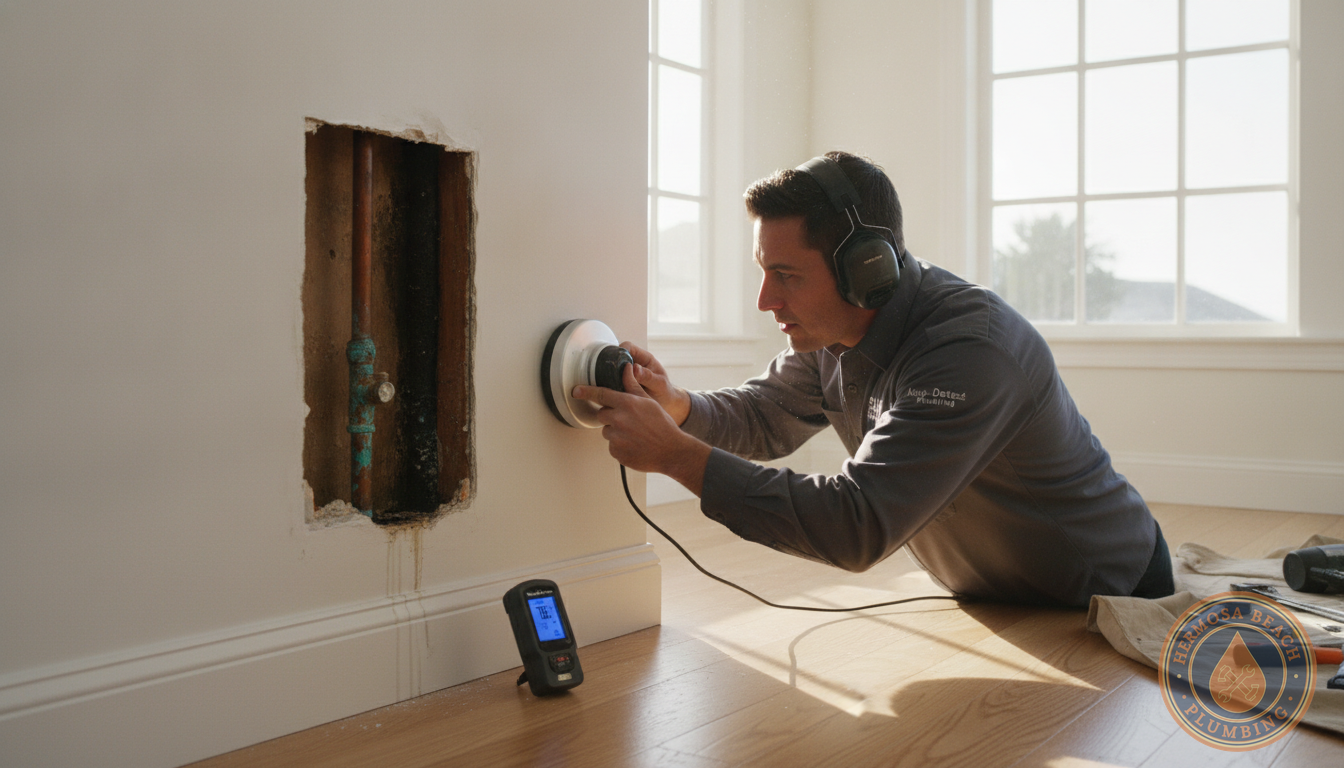
When a leak cannot be located visually, professional leak detection uses specialized equipment to find the source non-invasively — meaning without tearing open walls or cutting into slabs until the exact location of the leak is confirmed. Our leak detection and pipe repair service uses two primary tools:
Acoustic listening devices amplify the sound of water escaping from a pipe under pressure. Different pipe materials and leak types produce characteristic sounds that an experienced technician can distinguish from normal background noise. By moving the listening probe across the wall surface, floor, or ground, the technician can triangulate the position of the leak with a high degree of accuracy before making any access opening.
Moisture meters measure the moisture content of building materials without requiring physical access to the pipe. By probing the surface of drywall, wood framing, or concrete in the area of a suspected leak, a technician can map the extent of moisture saturation and identify the most likely path the water is following — which leads back to the source.
When a leak is located, our team provides a clear, written repair plan before any work begins. We explain what pipe section is affected, what the recommended repair method is, and what access will be required to complete it. For small pipe sections, a coupling repair or short pipe replacement is often sufficient. For properties with widespread corrosion across aging copper piping, a whole-home repipe may be the more economical long-term solution — and we'll tell you honestly which situation you're in.
Slab Leaks: A Special Category of Hidden Leak
Slab leaks — leaks in supply or drain pipes embedded in or beneath a concrete foundation — deserve special attention because they combine the challenge of detection with the complication of access. In Hermosa Beach, homes built on concrete slab foundations are common, and the copper supply lines embedded in those slabs are subject to the same coastal corrosion factors described above, plus the mechanical stresses of soil movement and concrete expansion and contraction.
Repairing a slab leak requires either breaking through the concrete to access the pipe directly (open slab repair), rerouting the affected line through the walls or attic to bypass the damaged section, or — in some cases — lining the existing pipe from the inside using a trenchless pipe lining method. The right approach depends on the location of the leak, the condition of the surrounding pipe, and the layout of your home. Our technicians will assess all three factors and present you with options before any work begins.
Acting Quickly Is Critical
The most important thing to understand about hidden leaks is that time is not on your side. A small leak that might cost a few hundred dollars to repair today can cause thousands of dollars in water damage, mold remediation, and structural repair if it goes unaddressed for months. California homeowner's insurance policies vary widely in how they cover water damage, but most require that the homeowner take reasonable steps to mitigate damage once a leak is known or suspected. Waiting is not a strategy that tends to work in your favor.
If you've noticed any of the warning signs described above, or if you simply want peace of mind about the condition of plumbing in an older Hermosa Beach property, the right move is to schedule a professional assessment. Early detection is almost always cheaper than the alternative.
Pair Leak Detection with Drain and Sewer Health Checks
While supply-side leaks get most of the attention, drain and sewer line failures can also cause hidden water damage — particularly when a cracked drain line beneath the slab or in a wall cavity allows wastewater to seep into the surrounding building materials. If you're scheduling a leak detection visit, it's worth discussing a sewer line inspection at the same time, especially if your home is over 30 years old. A camera inspection of the sewer lateral can reveal cracks, joint separations, and root intrusion that contribute to moisture problems and backed-up drains.
For homes with aging fixtures where supply line connections under sinks and toilets may be corroding, pairing a leak detection visit with a fixture and shut-off valve inspection is a practical way to address the most common failure points in one visit.
Hermosa Beach Plumbing Serves the Entire South Bay
We provide professional leak detection and pipe repair throughout Hermosa Beach and the surrounding South Bay communities. Whether you're in Manhattan Beach dealing with a suspected slab leak, in Redondo Beach with unexplained moisture in a wall, or in Del Aire with a water bill that keeps climbing, our team is equipped to find the source and repair it correctly. We also serve homeowners in Torrance and El Segundo with the same equipment and approach.
Don't let a hidden leak turn into a major restoration project. Call Hermosa Beach Plumbing at (424) 449-0012 or email [email protected] to schedule a leak detection assessment. We're available Monday through Sunday, 8 AM to 6 PM, and are located at 703 Pier Ave Suite C, Hermosa Beach, CA 90254.
Need Service?
Call +14244490012 or fill out our online form for a free, no-obligation quote.
Request Free Quote